
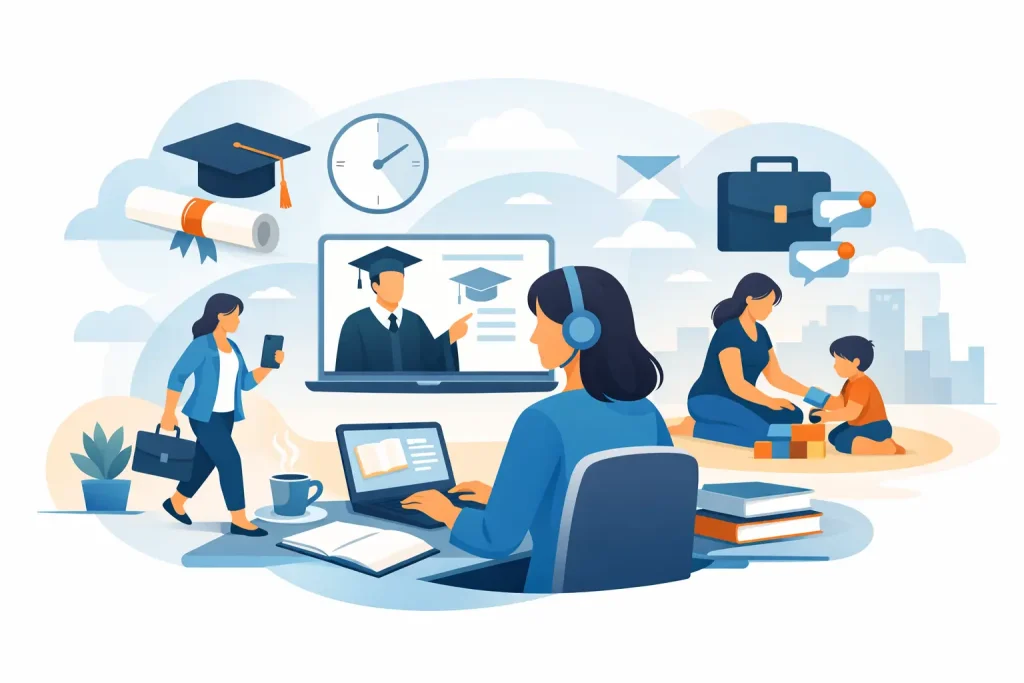
A doctorate should move your career forward, not force your life to stop. If you have been wondering how online PhD works while managing a full-time job, family responsibilities, and long-term goals, the answer is more practical than many people expect.
An online PhD is designed to deliver advanced academic training through a digital learning environment, with structured coursework, faculty guidance, research development, and dissertation milestones completed remotely. For working adults, that model matters. It creates a path to doctoral study without requiring relocation, daily campus attendance, or a pause in income.
How online PhD works in real life
At its core, an online PhD follows the same broad purpose as a traditional doctoral program. You build deep subject knowledge, develop research skills, work closely with faculty, and complete original scholarly work. The difference is in delivery.
Instead of driving to campus for lectures and meetings, you access your courses through an online learning platform. You review readings, participate in discussions, submit assignments, and communicate with instructors digitally. Depending on the program, classes may be asynchronous, which means you complete work on your own schedule within set deadlines, or they may include some live sessions at scheduled times.
For adult learners, asynchronous learning is often the feature that makes doctoral study possible. It allows you to study before work, during lunch breaks, after your children go to bed, or on weekends. That flexibility does not make the degree easy. It makes the degree manageable.
What an online doctoral journey usually includes
Most online PhD programs move through several stages. The first is coursework. In this phase, students study advanced theory, research methods, academic writing, and specialized topics in their field. Coursework helps build the intellectual foundation needed for doctoral-level research.
After coursework, many programs move into a more research-intensive stage. Students may complete comprehensive examinations, prepare a research proposal, or enter candidacy. This is where doctoral study becomes more independent. You begin narrowing your focus and defining the specific problem, issue, or question your dissertation will address.
The final major stage is the dissertation. This is a substantial research project that demonstrates your ability to contribute original thinking in your discipline. In an online environment, the dissertation process is still guided by faculty. You work with a supervisor or dissertation chair, receive feedback, revise your work, and move through formal approval stages remotely.
That progression is one reason online doctoral education appeals to professionals. It is structured enough to keep you moving, yet flexible enough to fit around existing responsibilities.
The role of faculty support and mentorship
One common concern about online education is whether students feel isolated. In a strong doctoral program, they should not. Faculty support remains central to the experience.
Doctoral students typically interact with professors through discussion boards, video meetings, written feedback, email, and one-on-one research supervision. In many cases, communication is more intentional online because it is built into the learning model rather than left to chance after class.
Mentorship matters even more at the PhD level than it does in undergraduate or master’s study. You are not only completing assignments. You are developing a scholarly voice, refining research questions, and learning how to produce work at a high academic standard. That process depends on expert guidance.
For this reason, prospective students should pay attention to how an online university supports faculty access, dissertation advising, and ongoing academic communication. Flexibility is valuable, but support is what helps students persist.
How scheduling really works for working professionals
The biggest advantage of online doctoral education is schedule control. For professionals, parents, caregivers, and military-affiliated learners, that flexibility can turn a distant ambition into a realistic next step.
That said, flexible does not mean unstructured. Online PhD programs still run on calendars, assignment deadlines, research benchmarks, and academic expectations. You may be able to choose when you study, but you are still responsible for consistent progress.
This is where self-management becomes essential. Students who do well in online doctoral programs usually create routines. They block out weekly study hours, set reading goals, stay ahead on research tasks, and communicate early when challenges arise. The freedom is real, but so is the need for discipline.
For many adults, that trade-off is worthwhile. A campus program may offer face-to-face contact, but it can also require fixed attendance, commuting, and geographic relocation. An online program removes those barriers and makes advanced education accessible to people whose lives are already full.
How online PhD works academically
A serious online PhD is not a shortcut. It is a different delivery format for advanced academic work. Students are still expected to read extensively, analyze ideas, conduct research, write at a doctoral level, and meet high standards for originality and rigor.
Assessment is often continuous rather than concentrated in a few high-stakes moments. You may complete research papers, literature reviews, discussion contributions, proposal drafts, presentations, and dissertation chapters over time. This ongoing model can benefit busy adults because it spreads the workload across the term and keeps momentum steady.
The academic experience may also feel more connected to professional practice. Many online universities design learning around real-world application, which can be especially helpful for students in leadership, business, education, public health, psychology, technology, and other career-focused fields. Instead of separating study from work, the program can allow you to bring workplace insight into your academic development.
Cost, value, and long-term return
Cost is a practical question, and it should be. Doctoral study is a major commitment, so affordability matters.
Online PhD programs can reduce several expenses associated with campus-based education. Students may avoid relocation costs, daily transportation, parking, and many on-site fees. They can often continue earning income while studying, which changes the financial equation significantly.
Still, tuition, technology requirements, books, and dissertation-related costs should all be reviewed carefully. The right question is not only whether a program is affordable today. It is whether the investment aligns with your career plans, leadership goals, and long-term earning potential.
For many adult learners, the value of an online PhD lies in access. A flexible, fully online structure allows them to pursue the highest academic credential while maintaining job stability and family commitments. That access is not a minor convenience. It is the reason doctoral education becomes possible at all.
Is an online PhD right for everyone?
Not always. Some students prefer the energy of a physical campus, face-to-face seminars, and in-person academic networking. Others thrive when their schedule is externally controlled.
Online doctoral study is often the better fit for self-directed learners who are motivated by clear goals and need education to work around existing responsibilities. If you are career-focused, organized, and ready to commit consistent time each week, the format can be a powerful match.
It also helps to be honest about your purpose. If you want a doctorate simply because the title sounds impressive, the process may feel long. If you want to deepen expertise, strengthen your credibility, grow into leadership, or open doors in academia or industry, the commitment usually makes more sense.
What to look for before you apply
Before choosing a program, look beyond convenience alone. Review whether the university offers strong academic support, clear dissertation guidance, relevant fields of study, and a learning model built for adults. You should also consider program structure, faculty interaction, tuition transparency, and the overall fit with your professional direction.
At institutions such as Expanding Horizon University, the appeal for many students is straightforward: fully online access, flexible scheduling, practical learning, and a broad range of doctoral options designed for real life. That combination matters when you want a degree that fits your ambition without disrupting your responsibilities.
If you have been waiting for the perfect time to begin, it may help to think about doctoral study differently. The question is not whether your life is busy. The question is whether your education can be built to meet your life where it is. For many driven adults, that is exactly how online PhD works, and exactly why it works.