
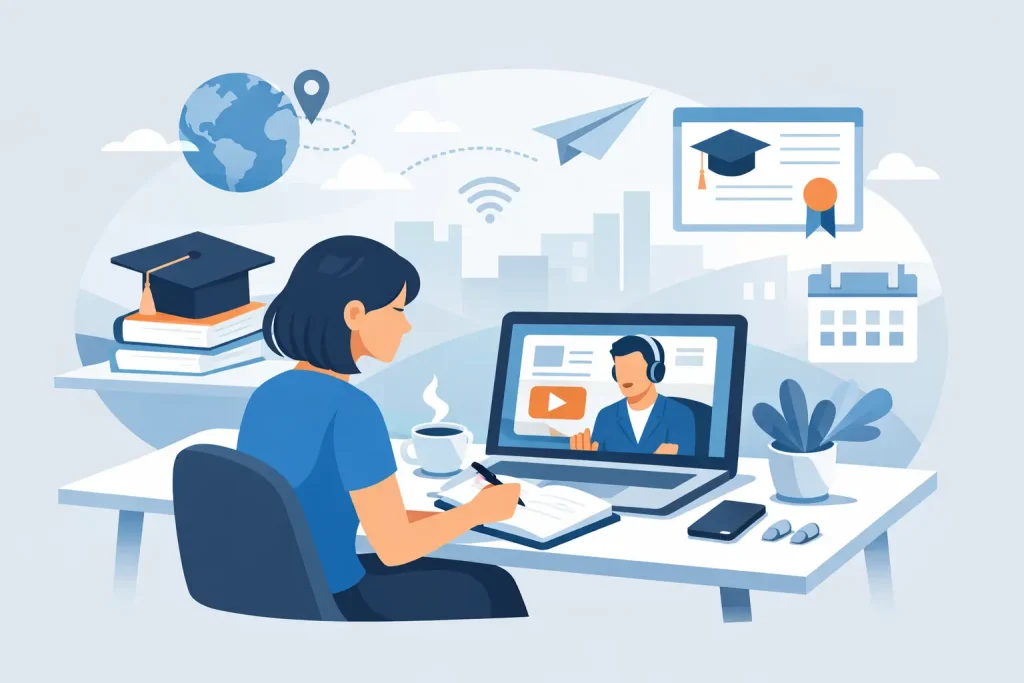
At some point, many adults reach the same decision – they want a degree, but they cannot pause work, family, or other responsibilities to sit in a classroom several days a week. That is exactly why so many people ask how to take distance degree programs in a way that is realistic, affordable, and worth the effort. The good news is that earning a degree online is not only possible, it can be one of the smartest ways to move your career forward when flexibility matters.
A distance degree is built for students who need education to fit into real life. Instead of reorganizing your entire schedule around campus attendance, you study through an online platform, complete coursework on a flexible timeline, and continue building your career while earning a recognized academic credential. For working professionals, parents, and career changers, that model can make higher education feel attainable again.
What it really means to take a distance degree
If you are wondering how to take a distance degree, start by understanding what the experience actually looks like. In most online programs, you access lectures, readings, assignments, discussion forums, and assessments through a learning management system. Some classes may include live sessions, while others are fully asynchronous, meaning you can log in when your schedule allows.
That flexibility is the biggest advantage, but it also requires intention. Distance learning gives you freedom, not less responsibility. You still have deadlines, academic standards, and expectations for participation. The difference is that the structure is designed around adult life rather than around a physical campus.
For many students, this is the better trade-off. You keep your income, remain close to your family, and avoid relocation or commuting. In return, you need to be organized enough to manage your own study routine.
How to take distance degree programs with confidence
The most successful online students do not simply enroll and hope for the best. They make a few smart decisions early.
First, choose a program that fits your goals rather than picking the fastest or cheapest option without thinking it through. If your goal is promotion, leadership growth, or a career transition, the degree should support that direction. A bachelor’s, master’s, postgraduate diploma, or PhD each serves a different purpose. The right choice depends on where you are now and where you want to go next.
Second, look closely at delivery format. Some students do well with structured weekly schedules and regular instructor interaction. Others need a program that allows them to study late at night, early in the morning, or on weekends. There is no single best model. The best program is the one you can actually sustain.
Third, make sure affordability is part of your plan. Tuition matters, but so does overall value. Flexible payment options, scholarships, and funding support can make a major difference for adults balancing education with household expenses. A degree should expand your opportunities, not create unnecessary financial pressure.
Build a schedule before classes begin
One of the biggest mistakes new online students make is waiting until coursework starts before figuring out when they will study. That usually leads to missed readings, rushed assignments, and constant stress.
A better approach is to claim your study time in advance. Look at your week honestly. If you work full time, care for children, or manage a changing schedule, your study plan needs to reflect that reality. You may have five early-morning hours per week, or two long evening sessions and a weekend block. What matters is consistency.
Treat those study hours like fixed appointments. When you make education part of your routine, motivation becomes less important because the habit is already there. This is especially important in distance learning, where flexibility can easily turn into procrastination if your calendar is not clear.
Create a study environment that supports follow-through
You do not need a perfect home office to succeed, but you do need a space that helps you focus. That could be a quiet corner at home, a desk in your bedroom, or a reliable place where you can work without constant interruption. The goal is not aesthetics. The goal is repeatable concentration.
It also helps to keep your technology ready before your first assignment is due. Make sure your laptop, internet connection, login details, and basic software are all working properly. Small technical problems become major barriers when your only classroom is online.
This is where a strong digital learning platform matters. A personalized LMS, clear course layout, and accessible student resources can save time and reduce frustration. Adult learners need convenience, but they also need clarity.
Stay engaged, even when life gets busy
Distance education works best when students stay connected to the learning process. That does not mean being online every hour. It means participating consistently enough to keep momentum.
Read course announcements. Check deadlines regularly. Ask questions when instructions are unclear. Join discussions with purpose. Reach out to faculty or support teams early if work or family obligations begin to interfere with your progress. In online learning, silence can create distance very quickly. Communication keeps you moving.
This is especially true during demanding seasons. A busy month at work or an unexpected family issue does not automatically mean you are failing. It means you need to use the support available to you. Serious adult learners are not expected to be perfect. They are expected to stay committed and respond proactively.
Use practical learning to your advantage
One reason many professionals choose online education is that it connects more directly to real life. Instead of treating study as something separate from work, a well-designed distance program often allows you to apply what you are learning immediately.
That matters. When assignments are built around case studies, workplace scenarios, problem-solving, and ongoing assessment, learning feels more relevant and more manageable. You are not just memorizing content for an exam. You are developing knowledge and skills that can strengthen your performance now.
For adult learners, this can be a major motivator. If your degree helps you think more strategically, communicate more effectively, or lead more confidently in your current role, the value becomes visible long before graduation.
Choose support, not just convenience
When people ask how to take distance degree programs successfully, the answer is not simply to find a flexible school. Flexibility matters, but support matters just as much.
A quality online institution should understand the realities of nontraditional students. That means accessible admissions guidance, responsive academic support, straightforward technology, and a structure that respects the fact that students are balancing multiple responsibilities. Convenience alone is not enough if students feel isolated once classes begin.
That is why many adult learners look for institutions designed specifically around online education. At Expanding Horizon University, the focus is on helping students pursue credible, affordable, fully online degrees without stepping away from work or family life. For career-focused adults, that kind of academic model can make progress feel practical instead of out of reach.
Know the trade-offs before you begin
Distance learning offers significant advantages, but it is still important to be honest about the trade-offs. You gain flexibility, but you may have fewer spontaneous interactions than on a physical campus. You save commuting time, but you need stronger self-management. You can study from anywhere, but you must take responsibility for keeping yourself on track.
For most adult learners, those trade-offs are well worth it. The ability to earn a respected credential while maintaining income and family stability is a powerful benefit. Still, success comes from choosing this format with open eyes. Online learning is not easier than traditional education. It is simply designed differently.
Make your next step a serious one
If you have been delaying your education because campus-based study does not fit your life, now is a good time to reconsider what is possible. Learning how to take distance degree programs starts with a practical mindset: choose the right program, protect your study time, use available support, and keep your long-term goal in view.
You do not need a perfect schedule, a perfect past, or perfect confidence to begin. You need a program built for real life and a clear reason for moving forward. When education meets you where you are, progress stops feeling distant and starts feeling achievable.