
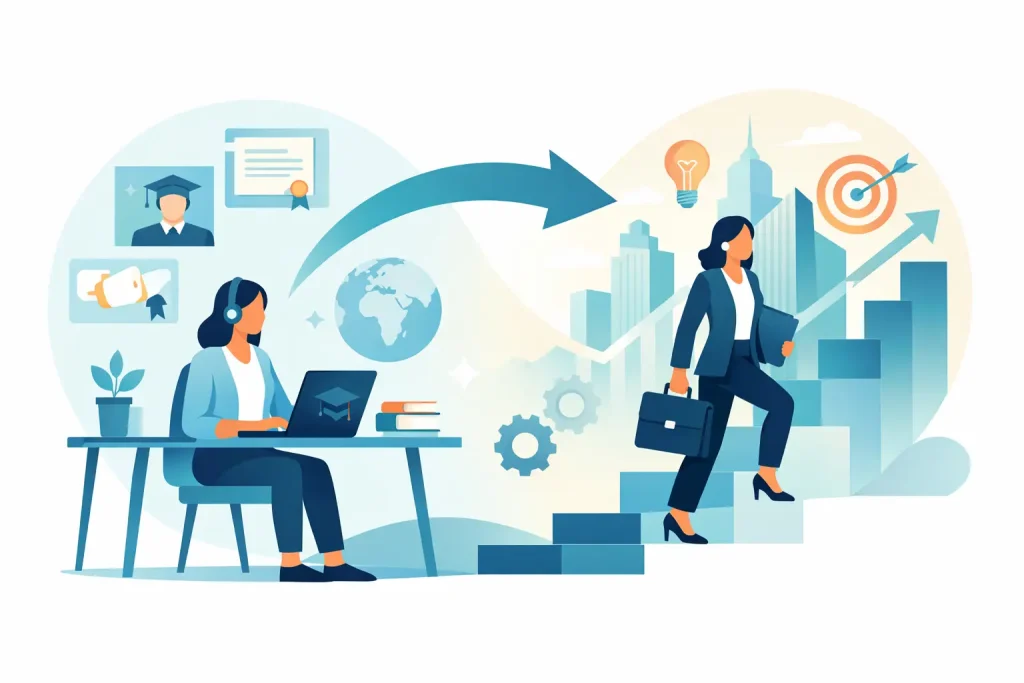
You do not need to put your life on hold to move into a new profession. For many working adults, a career switch through online masters study is the most realistic path forward because it allows progress without stepping away from a paycheck, family duties, or the routines that keep everything running. If you are ready for a different future but need a practical way to get there, this route deserves serious attention.
Why a career switch through online masters makes sense
Most career changers are not starting from zero. They already have work experience, transferable strengths, and a clear sense of what they want more or less of in their next role. What they often lack is a recognized credential, current industry knowledge, or the confidence to compete in a new field.
That is where an online master’s degree can create momentum. It helps bridge the gap between where you are now and where you want to be. Instead of asking you to leave your job and return to a campus, it fits learning around your existing responsibilities. That flexibility matters when your ambition is real but your schedule is full.
For adults balancing work and home life, convenience is not a luxury. It is the deciding factor. A strong online program gives you access to structured learning, practical assignments, and faculty support in a format built for working professionals. You keep earning while building qualifications that can open doors to management, specialist roles, or a completely new industry.
What an online master’s can actually help you change
A career switch is not always dramatic. Sometimes it means moving from operations into project management, from teaching into instructional design, or from general business roles into data-focused positions. In other cases, it means entering a new sector altogether, such as healthcare administration, information technology, psychology, education leadership, or public administration.
An online master’s is especially useful when the target field values formal credentials. Employers may be open to transferable experience, but many still want proof that you understand the language, methods, and expectations of the profession. A graduate degree can provide that proof while also helping you build a more credible story about your transition.
That said, not every field works the same way. Some careers depend heavily on licensure, supervised practice, or technical portfolios. Others reward experience more than degrees. The smart move is to match the program to the outcome you want rather than assume any master’s degree will automatically lead to change.
How to know if this path is right for you
The best candidates for a career switch through online masters programs are adults with a clear reason for changing direction. Maybe your current field has limited advancement. Maybe you want more stability, higher earning potential, or work that feels more meaningful. Maybe leadership has become your goal, but your current credentials no longer reflect your ambition.
If that sounds familiar, ask a few honest questions. Do employers in your target field commonly value a master’s degree? Will the program teach skills you can use immediately? Can you commit steady time each week for study, even with a busy schedule? And most importantly, does the degree move you toward a specific role rather than a vague hope of something better?
Clarity matters. A graduate degree is an investment of time, money, and energy. When your destination is defined, the investment becomes easier to justify and easier to complete.
The biggest advantages for working adults
The appeal of online learning goes beyond convenience. For many students, the real advantage is continuity. You do not have to pause your income, relocate, or restructure your household to pursue your next chapter. You study from home, from the office during available hours, or wherever your schedule allows.
Affordability also plays a major role. Traditional campus study often includes costs that go far beyond tuition, such as commuting, parking, housing, and lost wages. An online format can reduce those pressures and make graduate education more attainable for adults who need a realistic path, not an idealized one.
There is also a practical confidence that comes from learning while you work. You can test ideas in real time, connect coursework to professional challenges, and talk about your studies in interviews before you even graduate. That overlap can strengthen your resume and your self-belief at the same time.
What to look for in an online program
Not all online master’s programs are built for career changers. Some are designed for academic specialization, while others are clearly focused on professional advancement. If your goal is transition, choose a program that emphasizes applied learning, current industry relevance, and support for adult students.
Look closely at how the program is delivered. A flexible learning model, accessible course platform, and manageable pacing can make the difference between starting strong and dropping out halfway through. You should also pay attention to affordability, scholarship opportunities, and whether the curriculum reflects real workplace scenarios rather than abstract theory alone.
This is one reason many adult learners are drawn to institutions such as Expanding Horizon University. The model is built around flexibility, convenience, affordability, and practical online learning for professionals who need education to fit real life, not disrupt it.
Common concerns and the honest answers
A lot of prospective students worry that employers will not respect an online degree. That concern is understandable, but the conversation has changed. Employers increasingly care about accredited education, relevant skills, and whether a candidate can perform. For working adults, online study can even signal discipline, initiative, and time management.
Another concern is workload. Yes, graduate school is demanding. A flexible format helps, but it does not remove the need for commitment. You will need a study routine, family support where possible, and the discipline to keep going when work gets busy. The upside is that online programs are often designed with adult learners in mind, which makes them more realistic than rigid campus schedules.
Some students also fear they are too late to change careers. In many cases, age is less of a barrier than people assume. Employers value maturity, communication skills, leadership potential, and reliability. When you combine those strengths with updated knowledge and a new credential, you can become a compelling candidate.
Making your degree work for your transition
Earning the degree is only part of the process. You also need to position it well. That means connecting your past experience to your new direction instead of treating them as separate stories. A strong transition narrative explains why you are changing fields, what you have learned, and how your previous background gives you an advantage.
As you study, update your resume gradually. Add relevant coursework, projects, software, research, and achievements that support your target role. If your assignments involve real-world problem solving, talk about them in interviews. They can demonstrate readiness even before you hold a new job title.
It also helps to stay close to the labor market while you learn. Pay attention to job descriptions, common qualifications, and emerging skills in your chosen field. That way, you can shape your electives, projects, and professional conversations around what employers actually want.
A career switch through online masters study is not magic – but it is practical
No degree guarantees a new career overnight. Sometimes the result is a direct move into a new field. Sometimes it is a step through a related role first. Sometimes it strengthens your position for promotion within your current organization before leading elsewhere. The path can vary, and that is normal.
What makes this option powerful is that it is actionable. It gives ambitious adults a structured way to build credibility, gain focused knowledge, and keep moving forward without abandoning the responsibilities they already carry. That balance is what makes the difference for so many professionals.
If you are waiting for the perfect time to start over, you may wait longer than you should. A better question is whether you are ready to begin building the qualifications your next chapter requires. For many adults, progress starts not with a dramatic leap, but with one flexible, credible, career-focused program taken seriously from day one.