
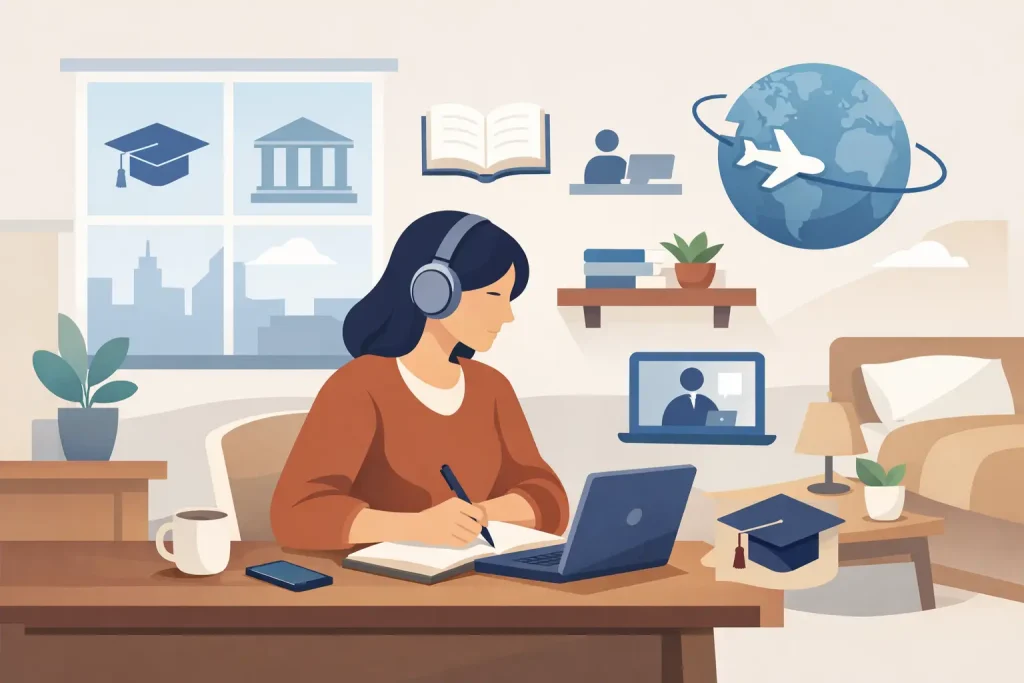
A missed class should not cost you a degree. For working adults, parents, caregivers, and professionals building a future while managing real responsibilities, study from home university programs make higher education possible in a way traditional campus models often do not. The real value is not just convenience. It is the chance to keep moving forward without putting your income, family routine, or career momentum on hold.
That matters because many students are not choosing between online and on-campus learning in the abstract. They are choosing between a practical path to advancement and no path at all. When education is designed around adult life instead of asking adult life to stop, more people can earn the credentials they need and deserve.
Why study from home university programs work for adults
The strongest online programs do more than move lectures onto a screen. They are built for students who have deadlines at work, family obligations at home, and goals that cannot wait another three or four years for the perfect time to appear. That is why flexibility is not a bonus feature. It is the foundation.
With study from home university programs, students can often review course materials early in the morning, complete assignments at night, and stay engaged on weekends. This structure gives learners room to progress consistently without stepping away from their current commitments. For many adults, that means they can stay employed, continue supporting their households, and still invest in long-term career growth.
There is also a confidence factor. Returning to school can feel intimidating, especially if it has been years since your last class. A well-designed online environment helps reduce that barrier. When course access is clear, expectations are organized, and support is available, students can focus less on logistics and more on learning.
What to look for in a study from home university program
Not all online degrees offer the same student experience. Some are built with adult learners in mind, while others simply adapt a traditional model without solving the problems working students actually face. If you are evaluating programs, start with fit.
Flexibility should be real, not promotional language. That means coursework structured in a way that allows you to study around your schedule, not someone else’s. You should also look for a program with practical curriculum, ongoing assessment, and academic expectations that connect to real work situations. Adults usually want education they can apply now, not only after graduation.
Affordability is another major factor. Tuition matters, but so does the full financial picture. A program may look accessible at first and become far less manageable once fees, materials, and scheduling complications are added. Scholarship options and funding support can make a meaningful difference, especially for students balancing education with everyday expenses.
Technology also deserves more attention than it usually gets. A personalized learning management system can shape your entire experience. If the platform is confusing, slow, or inconsistent, it adds friction to every class. If it is intuitive and structured for regular progress, it supports momentum. That is especially important for students who need efficient, focused study time.
Program options for different career stages
One of the biggest strengths of online higher education is range. Some students need a bachelor’s degree to open the next door. Others are ready for a postgraduate diploma, a master’s degree, or a doctoral path that supports leadership and specialization.
The right choice depends on your current position and your career target. A bachelor’s program may help you move into a professional field or qualify for advancement. A master’s degree can strengthen your credibility, deepen applied knowledge, and support management opportunities. A doctoral program may be the right step if you want to build subject expertise, move into senior leadership, or pursue higher-level academic and professional recognition.
This is where breadth matters. Institutions that offer multiple degree levels in career-relevant disciplines make it easier for students to start where they are and plan beyond the next step. Education becomes a pathway, not a one-time decision.
The trade-offs students should think about
Online study offers major advantages, but honest guidance matters. Study from home university programs are flexible, not effortless. The same independence that makes them appealing also requires discipline. If you tend to wait for external structure, you may need to build new habits around time management, communication, and weekly planning.
There is also the question of learning style. Some students thrive with self-paced reading, digital discussion, and independent project work. Others miss the energy of a physical classroom. Neither preference is wrong. What matters is whether the program creates meaningful engagement through faculty interaction, relevant assignments, and a clear sense of academic progress.
The best online programs address this directly. They do not assume motivation will carry students through every challenge. They create systems that keep learning active, feedback ongoing, and expectations visible. That kind of structure helps adult learners stay confident and connected from admission to graduation.
Career value beyond convenience
Too many people still ask whether online education is convenient, when the better question is whether it is effective. For career-focused adults, effectiveness shows up in outcomes. Does the program build knowledge you can use? Does it support advancement? Does it help you qualify for better opportunities without forcing you to pause your current livelihood?
That is where practical learning models stand out. Programs built around real-world scenarios, applied assignments, and continuous assessment often align well with adult learners because they connect study to everyday professional demands. You are not just absorbing information. You are strengthening judgment, communication, and problem-solving in ways that support leadership and performance.
For many students, the degree itself is part of a larger change. It can support a promotion, a transition into a new field, stronger professional credibility, or a long-delayed personal goal finally brought within reach. Education from home becomes more than a scheduling solution. It becomes a strategy for upward mobility.
How to choose a university that supports your goals
A smart choice starts with honesty about your life. How many hours can you realistically commit each week? Are you aiming for immediate job advancement, long-term leadership growth, or a formal credential that strengthens your position in a competitive market? The clearer you are about your priorities, the easier it becomes to identify the right program.
Look for an institution that respects the realities of adult students. That means accessible admissions guidance, consistent academic support, and a structure designed for people balancing multiple responsibilities. It also means a clear commitment to quality and affordability, not one at the expense of the other.
Expanding Horizon University is built around that model. With fully online degree options across bachelor’s, postgraduate, master’s, and doctoral levels, the university is designed for serious learners who need flexibility without lowering their ambitions. Its approach centers on accessible education, practical coursework, and a study experience that fits around work and family life.
Signs a program is built for real life
The strongest online universities understand that adult learners do not need added complexity. They need clarity, responsiveness, and structure that helps them keep going. If a school speaks in general promises but cannot explain how learning is delivered, how students are supported, or how schedules work, that is a signal to look deeper.
By contrast, programs designed for real life usually make their value clear. They offer consistent online delivery, career-relevant subjects, manageable formats, and support systems that recognize students are building their education alongside other major responsibilities. That kind of design can make the difference between starting a degree and finishing one.
Moving forward without stepping away from life
There is no perfect time to return to school. There is only the moment you decide your goals deserve a structure that works. Study from home university programs give adult learners a practical way to earn respected credentials while continuing to work, support their families, and build the future they want.
If you have been waiting for a path that respects your responsibilities as much as your ambition, this may be it. The right program will not ask you to choose between education and the life you have built. It will help you use education to strengthen it.